Why America Hasn't Bought Bitcoin Yet
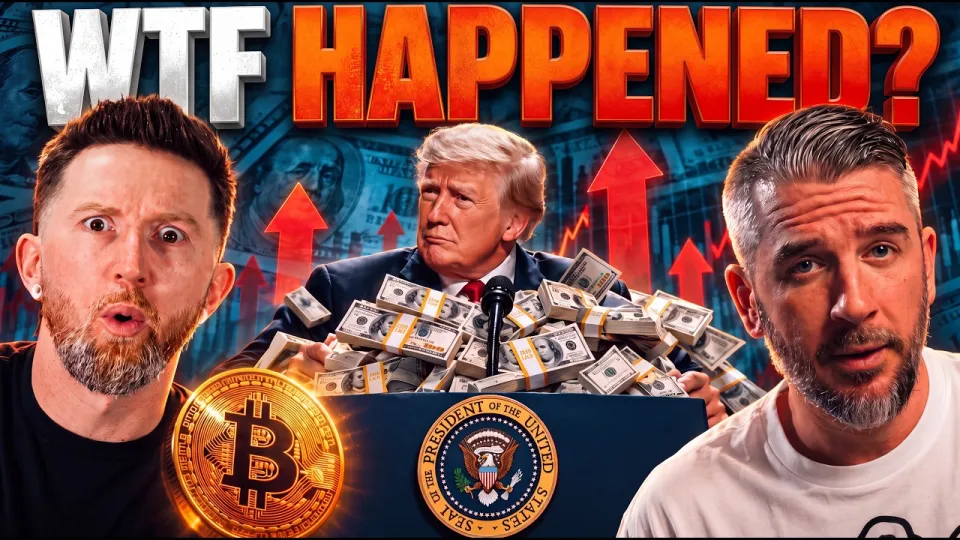
Want articles like this for your own video to promote it on YouTube and Google? Order them through the Telegram bot @sat_sit_bot. Articles with your video embedded are written and posted by the bot itself — on popular topical sites (no ads). Free trial — 50 articles.
· based on the channel Simply Bitcoin
Key takeaways
- The US strategic bitcoin reserve was created by executive order and holds only bitcoin seized in criminal cases, with no open-market purchases authorized.
- Buying bitcoin with public money would require congressional appropriation or a Treasury decision, neither of which has been made.
- Budget neutrality is the core constraint: any purchase must be funded without raising the deficit, which rules out a simple Treasury buy order.
- Market impact is the second constraint: a multi-billion-dollar federal bid would move price against the government's own entry.
- The Simply Bitcoin panel argues the delay is political and procedural, not a rejection of bitcoin as a reserve asset.
The United States has not bought bitcoin for its strategic reserve because the program was written to hold only coins already seized by law enforcement, not to purchase new ones on the open market. Any actual buying needs either a congressional appropriation or a Treasury decision that fits inside the federal budget, and neither exists yet. So the reserve is real, the bitcoin in it is real, but the buying mechanism is missing.
What the US strategic bitcoin reserve actually contains
The reserve is a stockpile of bitcoin forfeited in criminal and civil cases, transferred to federal custody rather than auctioned off as in past practice. That distinction matters: the government is not a buyer, it is a custodian of assets it already owns. The announcement framed the reserve as a store of value for the nation, but the mechanics are closer to an evidence locker that happens to appreciate.
The Simply Bitcoin discussion with Rustin, Hurley and Opti treats this as the central misunderstanding in the market. Retail investors heard "strategic reserve" and assumed a sovereign bid was coming. What was actually authorized was retention, not accumulation. The panel walks through how the order was drafted, why the language deliberately avoided a purchase mandate, and what a genuine buying program would have to look like 12:40.
Why open-market bitcoin purchases are hard to authorize
Spending public money on a volatile asset runs into three separate gates, and all three must open at once:
- Legal authority. A purchase of bitcoin with federal funds needs a statutory basis or an existing appropriation that can be read to cover digital assets. The executive order does not create spending power on its own.
- Budget neutrality. The political selling point was that the reserve costs taxpayers nothing. Buying bitcoin breaks that promise unless the money comes from another budget line, which means cutting something else.
- Accounting treatment. Federal agencies need a valuation and custody framework for an asset that trades 24/7 and settles on public blockchains. That infrastructure is being built, but it is not finished.
The panel argues that the budget-neutrality rule is the real bottleneck, not hostility to bitcoin. A reserve funded by seized assets is free; a reserve funded by purchases is a line item that has to survive committee markup 21:15.
The market impact problem nobody wants to price
If the Treasury tried to buy billions of dollars of bitcoin quickly, it would move the price against itself. The order book is deep but not infinite, and a known sovereign buyer front-runs every bid. The result is a worse average entry price and a public relations problem if the position goes underwater shortly after purchase.
A workable program would have to be slow, tranched and probably announced after the fact, more like an index fund's accumulation than a headline trade. That is a hard thing to sell politically, because the visible benefit arrives years later while the criticism arrives the same day. The panel notes that any serious sovereign accumulation strategy would look boring on purpose 28:50.
What would actually trigger federal bitcoin buying
Several paths exist, and they are not equally likely:
- Congressional legislation that explicitly authorizes purchases and names a funding source, such as reallocating a portion of existing reserve assets or proceeds from other forfeitures.
- A Treasury reinterpretation of existing authority, which would be legally fragile and almost certainly challenged.
- A budget-neutral swap, where the government converts another asset into bitcoin without increasing net spending.
- State-level momentum, where individual states build reserves first and federal action follows as a political response rather than a financial one.
The panel's read is that the state-level route is the most realistic near-term catalyst, because a governor can sign a bill without a committee fight over the federal deficit 34:20.
Common doubts about a bitcoin strategic reserve
The most frequent objection is that the government would never buy an asset it cannot control, and that a reserve is therefore a signal with no follow-through. That is half right: the reserve is a signal, but signals matter in markets, and the retention policy alone removes supply from the tradable float.
A second doubt is timing. If the US is waiting for a better price, it may wait forever, because bitcoin's volatility cuts both ways. A third is custody: coins held by the government can be sold by a future administration, which makes the reserve a political variable rather than a permanent floor. The panel treats all three as legitimate and none as disqualifying 41:05.
A fourth and more practical doubt concerns dilution of the narrative. Every month without a purchase invites the claim that the reserve was symbolic. The counterargument is that a symbolic reserve that survives one administration becomes precedent for the next, and precedent is how sovereign adoption actually happens.
How to read the leak and the headlines around it
The framing of a "leaked" reason should be handled carefully. What the discussion actually establishes is that the constraint is procedural and budgetary, not a secret finding that bitcoin is unsuitable. There is no hidden report concluding the asset is dangerous; there is a drafting choice that avoided committing taxpayer money.
For traders, that means the catalyst to watch is legislative text, not commentary. A bill with a funding clause and a sponsor is a real signal. A senator's optimistic quote is not. The panel recommends tracking committee calendars and Treasury statements rather than social media speculation 47:30.
Summary
The US strategic bitcoin reserve exists, but it is built from seized coins and has no mandate to buy. Open-market purchases require legal authority, budget neutrality and custody infrastructure, and none of the three is fully in place. The Simply Bitcoin breakdown with Rustin, Hurley and Opti makes the case that the delay is bureaucratic and political rather than a verdict on bitcoin itself. Watch legislation and state-level bills for the next real catalyst, and treat headline leaks as noise until funding language appears. Simply Bitcoin produced the video breakdown this analysis draws on.
Source: LEAKED: Here's The REAL Reason America Hasn't Bought Bitcoin For its Strategic Reserve... · Markdown version
Questions & answers
Has the US government actually bought any bitcoin?
No open-market purchases have been made. The strategic reserve holds bitcoin seized in criminal and civil forfeiture cases, transferred to federal custody instead of being auctioned. Buying new coins would require separate legal authority and funding that has not been granted.
Would a US bitcoin purchase push the price up?
A large federal bid would move the market against the buyer, raising the average entry price. That is one reason any program would likely be slow and tranched rather than announced as a single headline trade. The market impact is a constraint on execution, not just a bonus for holders.
Can a future administration sell the reserve?
Yes, which is why the reserve is best understood as a political commitment rather than a permanent floor. Coins held by the government remain subject to future policy decisions unless legislation locks in a holding requirement. That uncertainty is a fair criticism of the current setup.
What should investors watch for as the next catalyst?
Legislative text with an explicit funding source and a sponsor, plus state-level reserve bills that could create political momentum. Commentary and leaks without funding language are unlikely to change the reserve's composition. Committee calendars and Treasury statements are the more reliable signals.